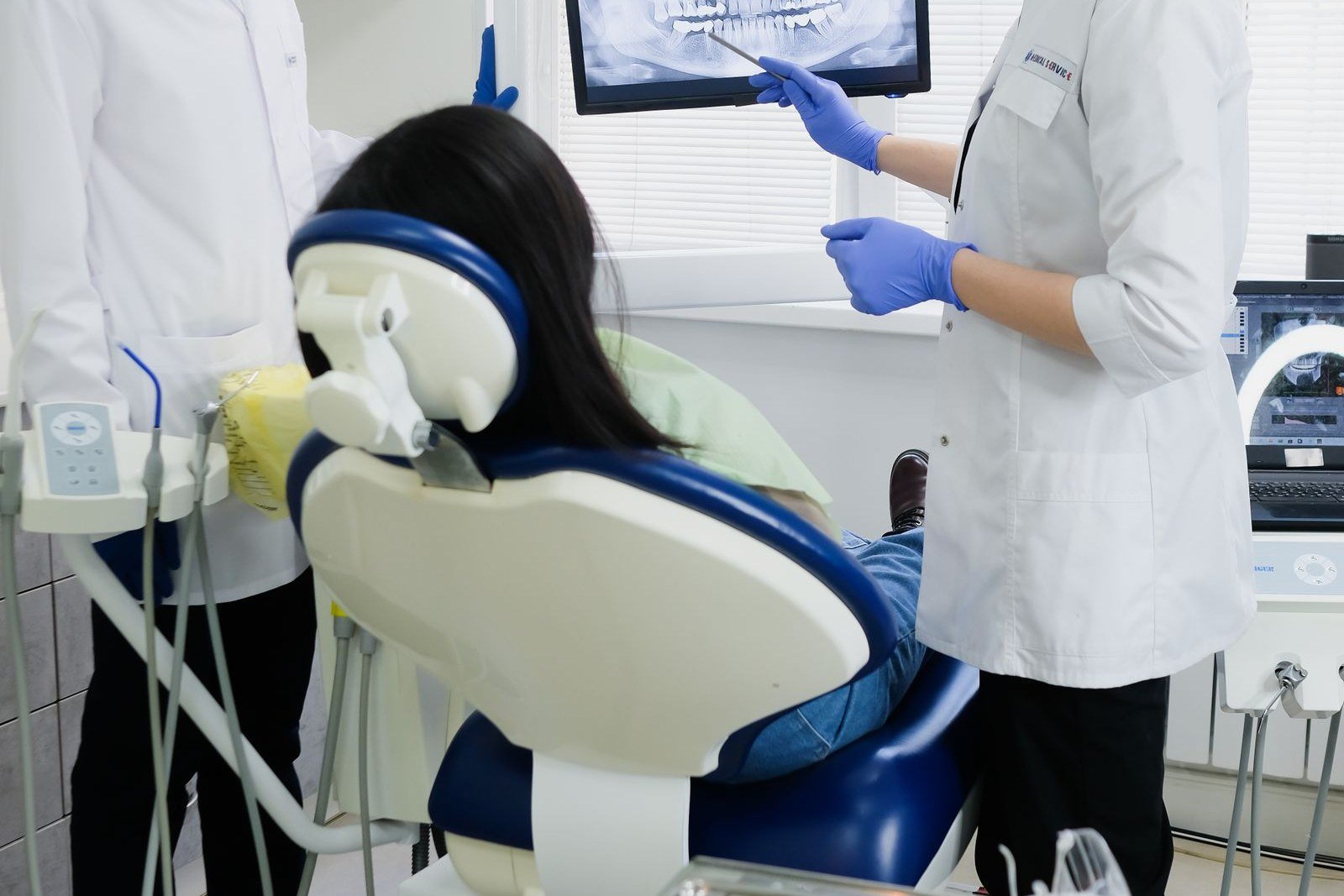
How to apply for dentistry in the UK
To apply for dentistry in the UK, submit one UCAS application by 15 October at 18:00 UK time, with a maximum of four dentistry choices. You also sit the UCAT admissions test in the summer before you apply, write a three-question personal statement, complete relevant work experience, and attend an interview, usually a Multiple Mini Interview, if you are shortlisted.
Dentistry is one of the most competitive courses in the UK, and the application runs on earlier deadlines than almost every other degree. This guide walks through each step in order, with the dates, tests and costs for the current cycle, so you can plan without missing a fixed deadline. Dates below are for 2027 entry, the cycle that closed on Thursday 15 October 2026. The pattern repeats each year, so if you are aiming for 2028 entry, use the same months and check the exact dates when UCAS and the UCAT Consortium publish them.
What do you need to apply for dentistry in the UK?
A dentistry application has six parts, and every one of them matters. Universities shortlist on grades and the UCAT first, then read the personal statement and interview the strongest applicants. The parts are:
- GCSEs and A levels (or equivalent). Strong grades, usually including Chemistry and Biology.
- The UCAT admissions test. Sat in the summer before you apply, at every UK dental school that takes school leavers.
- Relevant work experience. Time in a dental practice or a caring role, with reflection on what you learned.
- A UCAS application with four dentistry choices at most. Your fifth choice must be a different course.
- A three-question personal statement. A structured format, in place since 2026 entry.
- An interview. Most schools use Multiple Mini Interviews, known as MMIs.
Read our UCAS deadlines 2027 entry guide for the full cycle dates, including Extra, reply dates and Clearing.
How many dentistry choices can I make on UCAS?
You can choose a maximum of four dentistry courses on one UCAS application. You have five choices in total, so the fifth must be a non-dentistry course, such as biomedical science, if you want a backup. The same four-choice limit applies to medicine and veterinary medicine, and the limit covers medicine and dentistry combined, so you cannot pick four dentistry courses and four medicine courses.
Choose your four carefully. Schools use the UCAT in different ways: some set a strict cut-off score, some rank applicants by score, and some use it alongside GCSEs and predicted grades. Check each school’s selection policy on its own course page, or in the Dental Schools Council entry requirements guide, before you lock in your choices. A school where your UCAT score sits comfortably above last year’s published threshold is a safer pick than one where you are below it. The same four-choice rule applies to our medicine application guide UK, so read that too if you are weighing dentistry against medicine.
When is the UCAS deadline for dentistry?
For 2027 entry, the UCAS deadline for dentistry was Thursday 15 October 2026 at 18:00 UK time. The same early deadline covers medicine, veterinary medicine, and Oxford and Cambridge. It falls about three months earlier than the main UCAS deadline of Wednesday 13 January 2027, and UCAS says it is unusual for these competitive courses to consider late applications. Treat it as a hard deadline.
Applications opened in May 2026 and could be submitted from Tuesday 1 September 2026, but your school or college will usually set an earlier internal deadline so it can add your reference in time. Aim to submit at least a week before the UCAS deadline. If you are applying for 2028 entry, expect the deadline to fall in mid-October 2027 and confirm the exact date on the UCAS website when it is published.
Dentistry application timeline for 2027 entry
| Date | What happens |
|---|---|
| Wednesday 20 May 2026 | UCAT registration opens |
| Tuesday 23 June 2026 | UCAT booking opens |
| Monday 13 July to Thursday 24 September 2026 | UCAT testing window |
| Tuesday 1 September 2026 | Completed UCAS applications can be submitted |
| Thursday 15 October 2026, 18:00 | UCAS deadline for dentistry, medicine, veterinary medicine and Oxbridge |
| November 2026 to March 2027 | Interviews, mostly MMIs |
| December 2026 to May 2027 | Offers made, usually conditional on final grades |
| Friday 2 July 2027 | Clearing opens, though very few dentistry places appear in it |
| Thursday 12 August 2027 | A level results day, when conditional offers are confirmed or not met |
| September 2027 | Dental school starts |
Sources: UCAS key dates and UCAT test dates, checked November 2026. Dates for the 2027 UCAT cycle, used for 2028 entry, had not been published when this guide was written and are expected in early 2027.
What is the UCAT and how is it scored?
The UCAT, the University Clinical Aptitude Test, is the admissions test used by every UK dental school that takes school leavers, in the same way as for medicine. It is a computer-based test of thinking skills, not a science exam, so it contains no curriculum content. It takes just under two hours and has four separately timed subtests. You can sit it only once per test cycle, and your result counts only for that year’s applications.
The BMAT, once used by some dental schools, was discontinued, with its final sitting in 2023, so the UCAT is now the standard test for dentistry. Any guide that still lists the BMAT is out of date.
UCAT subtests, questions and timing
| Subtest | Questions | Time | What it tests | How it is scored |
|---|---|---|---|---|
| Verbal Reasoning | 44 | 22 minutes | Evaluating written information | 300 to 900 |
| Decision Making | 35 | 37 minutes | Judging complex information and logic | 300 to 900 |
| Quantitative Reasoning | 36 | 26 minutes | Evaluating numerical information | 300 to 900 |
| Situational Judgement | 69 | 26 minutes | Appropriate behaviour in real situations | Band 1 to 4 |
Source: UCAT Consortium test format and scoring, checked November 2026. Abstract Reasoning was removed from the test in 2025.
Your three thinking subtests add up to a total score between 900 and 2,700. Situational Judgement is reported separately in Bands 1 to 4, with Band 1 the highest. There is no pass mark and no negative marking, so answer every question. For context, the mean total score in the 2026 test cycle was 1,918 across 42,359 tests, according to the UCAT Consortium, and the top 10 percent scored 2,250 or more. The test fee in 2026 was £70 in the UK and £115 outside the UK.
Schools use the UCAT differently, so a score that wins an interview at one school may not at another. A few published examples from the 2026 entry cycle show the range: Manchester published a threshold of 2,200 for standard applicants, and Bristol published 2,340 for home applicants and 1,970 for overseas applicants. Some schools use the Situational Judgement band as a filter too: Manchester rejects applicants with Band 3 or 4, Queen Mary requires Bands 1 to 3 with a total score in the fourth decile or above, and Sheffield invites only Bands 1 and 2. Older cut-off figures quoted out of 3,600 come from before Abstract Reasoning was removed and cannot be compared with current scores.
Start preparation six to ten weeks before your test date, using the free official practice materials on the UCAT website. Book early once booking opens, because popular test centres fill up, and sit the test in the summer so your score is ready before the October UCAS deadline.
How many dental schools are there in the UK?
There are 18 universities in the UK that offer a primary dental degree, the BDS (or BChD at Leeds), leading to registration with the General Dental Council. Sixteen take school leavers on the standard five-year course, including two new schools, the University of East Anglia and the University of Portsmouth, which opened for September 2027 entry. The other two, Aberdeen and the University of Lancashire, run graduate-entry routes only. Every one of the 18 uses the UCAT, except the King’s three-year course for qualified doctors, which has no admissions test.
The 18 UK dental schools for 2027 entry
| Dental school | Route | Course length |
|---|---|---|
| University of Birmingham | Standard entry | 5 years |
| University of Bristol | Standard entry | 5 years |
| Cardiff University | Standard entry | 5 years |
| University of Dundee | Standard entry | 5 years |
| University of Glasgow | Standard entry | 5 years |
| King’s College London | Standard entry | 5 years |
| University of Leeds | Standard entry | 5 years |
| University of Liverpool | Standard entry | 5 years |
| University of Manchester | Standard entry | 5 years |
| Newcastle University | Standard entry | 5 years |
| University of Plymouth | Standard entry | 5 years |
| Queen Mary University of London | Standard entry | 5 years |
| Queen’s University Belfast | Standard entry | 5 years |
| University of Sheffield | Standard entry | 5 years |
| University of East Anglia | Standard entry, new for 2027 | 5 years |
| University of Portsmouth | Standard entry, new for 2027 | 5 years |
| University of Aberdeen | Graduate entry only | 4 years |
| University of Lancashire | Graduate entry only | 4 years |
Source: Dental Schools Council entry requirements guide for 2027 entry, published 25 June 2026, checked November 2026. The two new schools opened after a government expansion of dental training places announced in June 2026.
What grades do you need for dentistry?
Most UK dental schools ask for AAA to A*AA at A level for 2027 entry, according to the Dental Schools Council guide. Chemistry is usually required, and Biology is required or strongly preferred by most schools, with a third subject of your choice. Strong GCSEs matter too, particularly in Maths, English and the sciences, and some schools score GCSEs as part of shortlisting. Exact requirements vary between schools, so check each course page before you apply.
Grades alone do not win a place. A school that asks for AAA will still reject an applicant with A*A*A* if the UCAT score is below its threshold, and a school that weights GCSEs heavily may favour an applicant with top GCSEs over one with higher predicted A levels. Many schools also make lower contextual offers to applicants who meet widening participation criteria, such as attending a school with low progression to university or living in an area of low participation. Read the entry requirements for each of your four choices before you apply, and be honest about whether your predicted grades and UCAT score match what each school actually asks for.
If your grades are below the standard offer, gateway and foundation routes into dentistry are offered by the University of Bristol, King’s College London, the University of Leeds, the University of Liverpool, the University of Manchester and the University of Plymouth. These add a foundation year and ask for lower grades, usually for applicants from widening participation backgrounds.
How much work experience do you need for dentistry?
There is no set number of hours. The Dental Schools Council guidance for 2027 entry asks applicants to show an informed choice: that you understand the dental profession, what attracts you to it, and how it compares with other healthcare careers. Most dental schools expect some time in a dental practice, usually around two weeks, plus other experience you can reflect on.

What counts is broader than shadowing a dentist. Time in a dental practice shows you the daily work, the teamwork and the patient contact. Caring or service roles, such as volunteering in a care home, helping at a youth club, or paid work in a shop or restaurant, show the empathy, communication and manual skills that dentistry needs. Any hands-on hobby that needs fine control, from playing an instrument to model making, is worth mentioning too, because dentistry is a practical, hands-on profession.
Two or three experiences you can discuss in depth will serve you better than a long list. Pick the moments that changed how you think about dentistry, write down what you saw, what you did and what you learned, and use those reflections in your personal statement and at interview. Read our work experience for students guide for practical ways to find a placement.
What should a dentistry personal statement cover?
Since 2026 entry, UCAS has replaced the single free-text personal statement with three structured questions, sharing one overall limit of 4,000 characters, with at least 350 characters for each answer. The three questions ask why you want to study the subject, how your qualifications and studies have prepared you, and what else you have done outside education. The 4,000 character limit covers all three answers together, so keep each one focused.
For dentistry, use the first question to show genuine motivation, grounded in what you have actually seen and done, not in general claims about wanting to help people. Mention the manual, practical side of dentistry and what you learned from watching it up close. Use the second to connect your subjects to dentistry, including Chemistry and Biology and any relevant wider reading. Use the third for work experience, volunteering and activities, with reflection on what each one taught you. Avoid listing achievements without saying what you learned from them. Read our UCAS personal statement guide for the full structure.
What happens at a dentistry interview?
Most UK dental schools use Multiple Mini Interviews, known as MMIs. An MMI is a circuit of short stations, usually six to ten, each lasting around five minutes and testing a different skill, such as communication, ethical reasoning, teamwork, manual awareness or motivation for dentistry. Some schools use panel interviews instead, and some run both. Interviews run from November to March, and offers normally follow between December and May. No offer is made without an interview.
Prepare by knowing your personal statement well, because interviewers may ask about it, by practising ethical scenarios out loud, and by thinking through why dentistry rather than medicine, a question that comes up often. Some stations test manual dexterity, so be ready for a practical task. Keep up with current issues in NHS dentistry too, such as access to NHS dentists, because interviewers want to see that you understand the profession you are joining. Read our university interview tips guide for general preparation that applies to MMIs too.
How much does it cost to study dentistry in the UK?
A dentistry degree is a long degree, usually five years, so the total cost is higher than a three-year course. For home students in England, tuition is up to £9,790 a year for 2026/27, and the government has announced a cap of £10,050 for 2027/28. You borrow the tuition fee for the first four years through Student Finance, and the NHS Bursary pays your tuition from year 5. International fees are much higher and vary by school.
Dentistry costs and funding for home students, 2026/27
| Item | Amount | Source |
|---|---|---|
| Tuition fee, England | Up to £9,790 a year | Department for Education fee cap, 2026/27 |
| Tuition fee, 2027/28 | Cap announced at £10,050 a year | UK government announcement |
| UCAS application fee, 2027 entry | £34.50 | UCAS |
| UCAT test fee, 2026 | £70 in the UK, £115 outside the UK | UCAT Consortium |
| Tuition fee loan, years 1 to 4 | Up to £9,790 a year, paid direct to the university | Student Finance England |
| NHS Bursary tuition, year 5 onwards | Up to £9,790 a year, paid direct to the university | NHS Business Services Authority, 2026/27 |
| NHS Bursary grant | £1,081 a year to everyone eligible | NHS Business Services Authority, 2026/27 |
| NHS Bursary living costs | Up to £3,447 a year in London, or £2,855 elsewhere, means tested | NHS Business Services Authority, 2026/27 |
| Maintenance loan, years 1 to 4 | Up to £10,830 a year away from home outside London, or £14,135 in London | Student Finance England, 2026/27 |
From year 5, your maintenance loan drops to a reduced rate and the NHS Bursary takes over part of your living costs, paid in three termly instalments. Apply for the bursary within nine months of the start of the academic year. Students domiciled in Scotland pay no tuition fee at Scottish universities, with the Scottish government paying £1,820 a year through SAAS. Read our student finance UK guide for the wider loan and repayment rules, and think about the full cost of five years, including travel to placements in the clinical years, before you apply. If you are still choosing a direction, our how to choose a career path guide can help you weigh dentistry against other options.
Can I apply for dentistry as a graduate?
Yes. Graduate entry dentistry is a shortened course for people who already hold a degree. The Dental Schools Council lists four dedicated graduate-entry programmes for 2027 entry, all four years except the three-year course for qualified doctors. Most ask for at least a 2:1 degree in a bioscience or health subject. All four use the UCAT, except the King’s course for medical graduates, which has no admissions test.
Dedicated graduate-entry dentistry programmes, 2027 entry
| University and programme | UCAS code | Length | Admissions test |
|---|---|---|---|
| University of Aberdeen, BDS | A201 | 4 years | UCAT |
| King’s College London, Graduate and Professional Entry BDS | A202 | 4 years | UCAT |
| King’s College London, Entry Programme for Medical Graduates BDS | A204 | 3 years | None |
| University of Lancashire, BDS | A202 | 4 years | UCAT |
Source: Dental Schools Council entry requirements guide for 2027 entry, checked November 2026. Aberdeen and King’s graduate programmes are open to UK applicants only; the University of Lancashire course is open to UK and international applicants.
Graduates can also apply to the standard five-year course: 15 of the standard courses admit graduates, and 14 of those publish degree requirements. Funding works differently for graduates, so check the funding rules for your own situation before you apply, and confirm each school’s test and degree requirements on its own course page, because they change between cycles.
What happens after you apply?
After the 15 October deadline, universities shortlist on grades and UCAT scores, then invite the strongest applicants to interview between November and March. Offers are usually conditional on your final A level grades and on health and background checks, and most arrive between December and May. You then pick a firm and an insurance choice, as with any UCAS application, and your place is confirmed on A level results day, Thursday 12 August 2027 for 2027 entry.
If you miss your grades, your firm or insurance choice may still accept you, and a small number of dentistry places can appear in Clearing from Friday 2 July 2027, though competition for them is fierce. If you do not get a place, you can reapply the next cycle, using the year to strengthen the weakest part of your application, whether that is the UCAT, work experience or grades. Reapplicants go through the same October deadline and the same test.
Once you graduate, you register with the General Dental Council, which regulates the whole UK dental team, and complete a year of dental foundation training before you can practise independently. The five-year BDS, or BChD at Leeds, is the standard route into that registration.
Frequently asked questions
How many dentistry choices can I make on UCAS?
Four. You have five UCAS choices in total, and a maximum of four can be dentistry. Your fifth choice must be a different course, and the four-choice limit covers medicine and dentistry combined.
What is the UCAT and when do I take it?
The UCAT is the admissions test used by every UK dental school that takes school leavers. It has three scored subtests plus Situational Judgement, lasts just under two hours, and is scored from 900 to 2,700, with Situational Judgement reported separately in Bands 1 to 4. For 2027 entry, testing ran from 13 July to 24 September 2026. You sit it in the summer before you apply, and you can take it only once per cycle.
Do I still need the BMAT for dentistry?
No. The BMAT was discontinued, with its final sitting in 2023. Every UK dental school now uses the UCAT. Ignore any guide that still lists the BMAT.
How much work experience do I need for dentistry?
There is no set number of hours. The Dental Schools Council asks for an informed choice, shown through reflection on what you saw and learned. Most schools expect some time in a dental practice, usually around two weeks, plus other caring or service experience. Two or three experiences discussed in depth beat a long list.
Can I apply for dentistry as a graduate?
Yes. Four dedicated graduate-entry programmes run for 2027 entry: Aberdeen, King’s College London and the University of Lancashire at four years, plus a three-year King’s course for qualified doctors. Most ask for at least a 2:1 degree in a bioscience or health subject. Graduates can also apply to 15 of the standard five-year courses.
How many dental schools are there in the UK?
There are 18 universities in the UK offering a primary dental degree for 2027 entry. Sixteen take school leavers on the standard five-year course, including the new schools at the University of East Anglia and the University of Portsmouth. Aberdeen and the University of Lancashire run graduate-entry routes only.