Your CV is often the very first impression an employer forms of you, sometimes deciding within seconds whether to read on or move to the next application. For students and recent graduates without years of professional experience to draw on, knowing how to present what you do have effectively matters more than trying to compete on experience alone.
This guide covers how to structure a CV, what to include when you have limited work experience, and mistakes that quietly cost interviews.
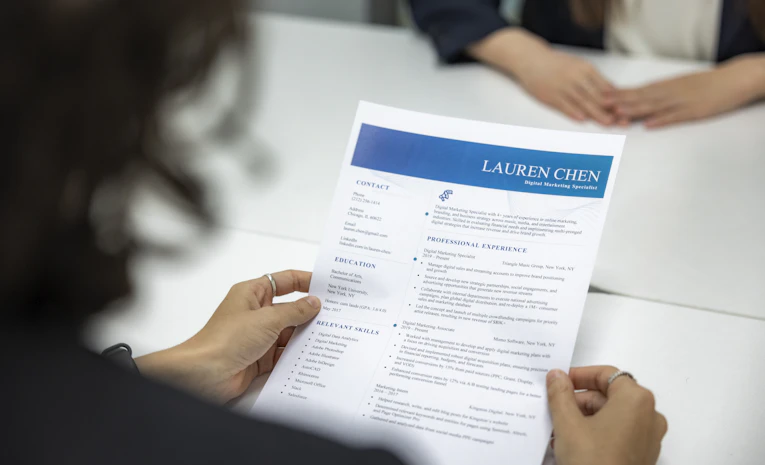
CV Structure for Students and Graduates
A clear, logical structure matters more than creative formatting, since recruiters often scan a CV in seconds before deciding whether to read it properly.
- Contact details: Full name, phone number, professional email address, and location (city is usually sufficient, a full address is not necessary).
- Personal statement: Two to three sentences summarising who you are, what you’re looking for, and your key strengths, tailored to the specific role.
- Education: Most recent qualifications first, including grades where strong, university or college name, and dates.
- Work experience: Including part-time jobs, internships and volunteering, not just formal full-time roles.
- Skills: A focused list of relevant skills, both technical and interpersonal, matched to what the role actually asks for.
- Additional sections: Relevant achievements, extracurricular activities, or hobbies, if they genuinely add something the rest of the CV does not already show.
What to Do When You Have Limited Experience
Most students and first-time applicants worry unnecessarily about a thin work history. In practice, several other things carry real weight:
- Transferable skills from any job, such as communication from customer-facing roles, or organisation from managing coursework deadlines alongside part-time work.
- Volunteering and unpaid experience, which counts as genuine, relevant experience and should be included with the same detail as paid roles.
- Extracurricular activities and societies, particularly where you held a position of responsibility, such as organising an event or leading a group project.
- Academic projects and coursework, especially where they demonstrate specific skills relevant to the role, such as research, data analysis or presentation skills.
Writing Content That Actually Stands Out
| Weak Example | Stronger Example |
|---|---|
| “Responsible for customer service” | “Handled up to 50 customer queries per shift, resolving issues calmly under pressure” |
| “Worked in a team on a project” | “Coordinated a four-person team to deliver a research project two weeks ahead of deadline” |
| “Good communication skills” | “Presented findings to a class of 30, receiving positive feedback on clarity and structure” |
Wherever possible, quantify your impact with a number, whether that is people managed, money handled, or a percentage improvement, since specifics are consistently more convincing than general claims.
Tailoring Your CV for Each Application
A single generic CV sent to every application performs noticeably worse than one adjusted for each specific role.
- Read the job description carefully and note the specific skills and experience it repeatedly mentions.
- Reorder or rewrite bullet points to lead with the experience most relevant to that particular role.
- Adjust your personal statement to reflect the specific role and organisation, rather than a generic, one-size-fits-all summary.
- Match keywords where genuinely accurate, since some employers use automated screening that looks for specific terms from the job advert.
Common CV Mistakes to Avoid
- Spelling and grammar errors, which are consistently cited by recruiters as an instant reason to reject an otherwise decent CV
- Making it too long, since most student and graduate CVs should fit comfortably on one to two pages
- Using an unprofessional email address, which is a quick, easy fix that avoids an unnecessary poor first impression
- Listing duties instead of achievements, describing what a role involved rather than what you specifically accomplished in it
- Exaggerating or fabricating experience, which risks serious embarrassment if questioned at interview, and can end an application immediately if discovered
Using AI Tools Responsibly
AI tools can help brainstorm phrasing or check structure, and many employers are comfortable with this level of support. However, any final CV should reflect genuine, factually accurate information about you, since claims are typically tested further at interview or assessment stage, and inaccurate AI-generated claims can undermine an otherwise strong application.
Frequently Asked Questions
How long should a student CV be?
Most student and graduate CVs should fit on one page, or at most two if you have a genuinely substantial amount of relevant experience to include.
What if I have no work experience at all?
Focus on volunteering, academic projects, extracurricular activities and transferable skills, all of which are considered legitimate, relevant experience by most employers reviewing entry-level applications.
Should I include a photo on my CV?
In the UK, it is generally not expected or recommended to include a photo, since it is not standard practice and can occasionally introduce unconscious bias into the hiring process.
Is it okay to use the same CV for every application?
A tailored CV that reflects the specific role’s requirements consistently performs better than a generic version sent to every application without adjustment.
A strong CV comes down to clear structure, honest specificity, and genuine tailoring to each role, not creative design or padded claims. If you’re applying for an apprenticeship specifically, our guide to apprenticeships covers the wider application process your CV will support. If you’re targeting internships instead, our guide to UK internships covers where to look and how to apply.